

Exploring the Intersection of Sikhism and Carl Jung’s Philosophy
Sikhism and Carl Jung’s philosophy both offer profound insights into the nature of the human psyche, self-realization, and the pursuit of spiritual truth. Although these traditions emerge from different domains—one religious and the other psychological—there is a remarkable resonance between them. Both paths offer a holistic vision of human existence, urging individuals to transcend the limitations of the ego and to connect with deeper truths. By exploring the teachings of Sikhism and the ideas of Carl Jung, we can uncover fascinating parallels between spiritual practice and psychological growth.
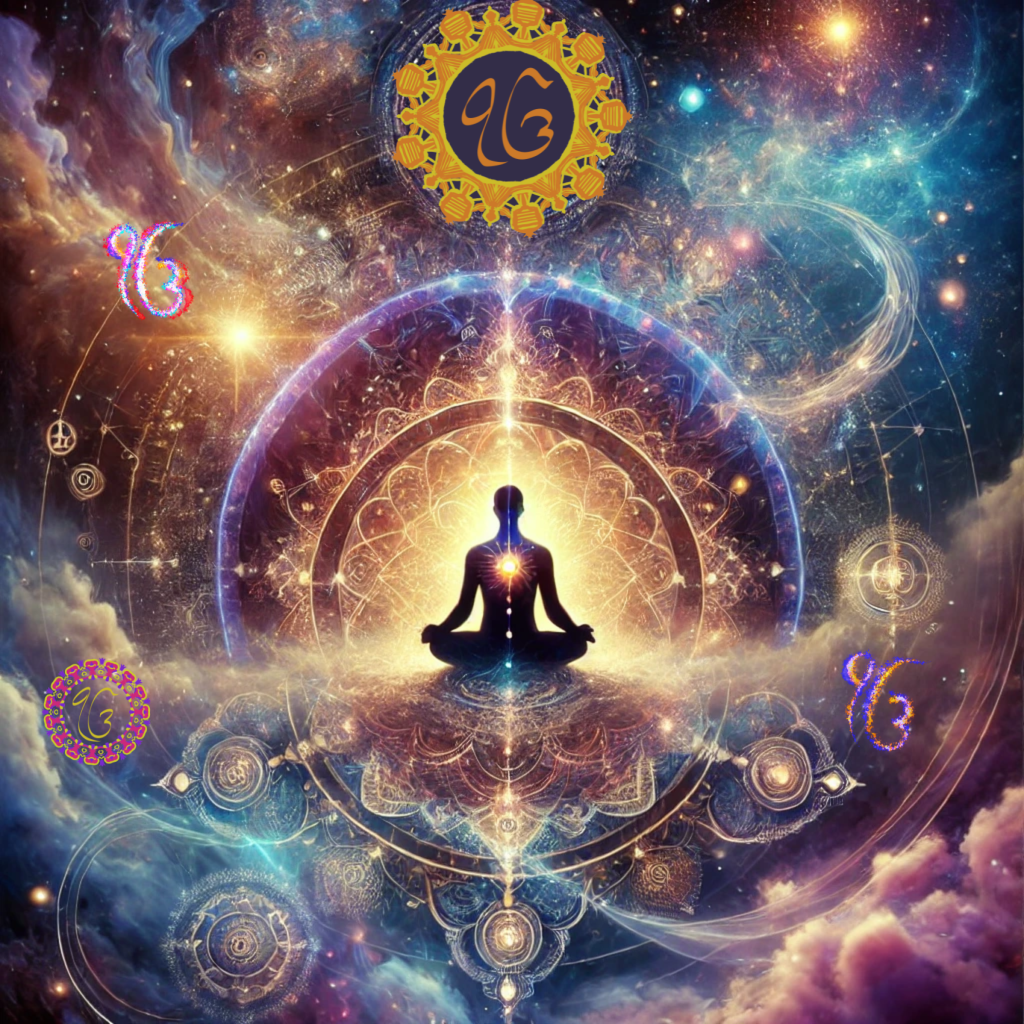
Sikhism: The Path of Divine Truth and Service
At the heart of Sikhism lies the belief in the oneness of God, the universality of truth, and the need to transcend the ego to realize one’s true nature. Founded by Guru Nanak in the 15th century in the Punjab region of India, Sikhism presents a vision of spirituality that is both deeply personal and socially engaged. The teachings of Guru Nanak emphasize that the ultimate truth is beyond human comprehension but can be experienced through devotion to God (Waheguru) and through selfless service to others.
The central tenet of Sikhism is Ik Onkar, which means “There is only one God.” This oneness of God signifies the interconnectedness of all beings and the ultimate unity of existence. Guru Nanak’s teachings suggest that human beings are not separate from the divine; instead, we are part of the vast, unified fabric of the cosmos. Sikhism urges practitioners to see the divine presence in all forms of life, emphasizing humility, equality, and the oneness of all humanity.
A key practice in Sikhism is Naam Simran, the repetition of God’s name, which allows practitioners to focus their minds and cultivate a deep sense of connection with the divine. Another central practice is seva, or selfless service. Sikhism teaches that spiritual growth comes not through retreat from the world but through active participation in it, especially through helping others without seeking personal gain. The idea is to transcend individual ego and develop a sense of unity with all people and all creation.
Through these practices, Sikhism emphasizes the dissolution of the ego—referred to as Haumai—in favor of a life of humility and devotion to God. The goal is to realize that the ego is an illusion, and that true freedom and peace come from recognizing the divine presence in every moment.
Carl Jung: The Journey Toward Psychological Wholeness
Carl Jung, a Swiss psychiatrist and the founder of analytical psychology, also believed in a deep, transformative journey toward self-realization. His concept of individuation is central to his philosophy. Individuation refers to the process by which a person integrates the various parts of their psyche—the conscious and unconscious, the shadow and the light, the masculine and feminine aspects—into a harmonious whole.
Jungian psychology posits that the human psyche is not merely divided between the conscious and unconscious mind, but also contains archetypes, universal symbols, and themes that shape human behavior and experience. These archetypes reside in the collective unconscious, a shared mental space that transcends individual consciousness and links all human beings.
The goal of individuation, according to Jung, is for an individual to come into deeper contact with their Self, a transcendent aspect of the psyche that represents the totality of the person, beyond ego. This process requires integrating the repressed or hidden parts of the self—what Jung calls the shadow—and confronting unconscious material that may be causing inner conflict. By embracing these darker aspects, one can heal and become whole, embracing both light and shadow.
Jung believed that the journey of individuation is not merely psychological but also deeply spiritual. He saw religion, mythology, and symbolism as expressions of the unconscious mind that point toward the deeper truths of the human experience. Spirituality, for Jung, was a way of understanding and integrating these unconscious elements, leading to a greater connection with the divine and with the deeper layers of the self.
Key Similarities: The Journey to Wholeness
While Sikhism and Jung’s philosophy come from distinct traditions—religion and psychology—their approaches share striking similarities, particularly in their views on self-realization, the integration of opposites, and the transcendence of the ego. Let’s take a closer look at these common themes.
Self-Realization and Unity: At the core of both Sikhism and Jung’s philosophy is the concept of self-realization, which involves recognizing one’s true nature and transcending the ego. In Sikhism, the ultimate goal is to realize that there is no separation between the self and the divine. The individual self (Atman) is seen as an expression of the one universal God (Waheguru), and the journey of spirituality is about returning to this divine unity.
Jung’s concept of the Self is a similar idea. For Jung, the Self represents the person’s totality, beyond the fragmented and limited ego. It is not an isolated, individual self but a deeper, universal aspect of being that is interconnected with the larger unconscious. Jung argues that individuation is about integrating the many facets of the personality into a unified whole—just as Sikhism teaches that spiritual growth arises from understanding one’s connection to the divine and to all of humanity.
The Integration of Opposites: A central theme in both Sikhism and Jung’s philosophy is the integration of opposites. Jung’s concept of shadow refers to the unconscious, repressed parts of the personality, which often contain aspects that are considered negative or undesirable. The individuation process involves confronting and integrating these aspects, leading to wholeness. This integration of opposites is vital for achieving psychological maturity and spiritual awakening.
In Sikhism, there is also a call to transcend duality. Maya, the illusion of the material world, is seen as a source of division and conflict. Sikh teachings encourage practitioners to rise above dualistic thinking—such as good vs. evil, and self vs. other—and to recognize the oneness of all things. The idea of transcending duality resonates deeply with Jung’s notion of integrating opposites, as both teach that true understanding and growth come from reconciling differences and embracing the fullness of existence.
Transcending the Ego: Both Sikhism and Jung’s philosophy underscore the importance of transcending the ego. In Sikhism, the ego (Haumai) is seen as the primary obstacle to spiritual realization. It creates a sense of separation from the divine and from others. To overcome this ego, one must engage in practices like Naam Simran (the repetition of God’s name) and seva (selfless service), both of which help cultivate humility and dissolve the egoic self.
Similarly, Jung believed that the ego must be transcended in the process of individuation. The ego is the part of the psyche that is conscious and self-aware but also limited by its attachments, fears, and illusions. By confronting and integrating the unconscious, the individual can transcend the limitations of the ego and become more attuned to their deeper, more authentic self.
Spiritual Growth Through Service and Self-Reflection: Sikhism teaches that seva—selfless service to others—is an essential practice for spiritual growth. Through seva, one works to purify the mind and cultivate a deep sense of humility and compassion. Service is not just an act of kindness; it is a spiritual discipline that connects the individual to the divine by embodying the values of love and unity.
In Jung’s philosophy, self-reflection is crucial for individuation. Jungian psychotherapy encourages individuals to confront their shadow, recognize unconscious patterns, and engage in active self-awareness. While Jung did not emphasize service in the same way as Sikhism, his philosophy similarly stresses the importance of introspection and integration of the unconscious for personal growth.
The Role of the Divine and the Collective Unconscious
Another fascinating intersection between Sikhism and Jung’s philosophy is their shared understanding of the divine. In Sikhism, God (Waheguru) is both transcendent and immanent, present in every part of creation. The divine is not an external entity to be worshipped from a distance, but a living presence within all beings. This reflects the idea that spiritual realization is not about seeking an abstract God outside of oneself but about recognizing the divine within.
Jung’s concept of the collective unconscious offers a somewhat parallel idea. While not explicitly religious, the collective unconscious houses universal symbols, archetypes, and experiences that are shared by all human beings. These archetypes can be seen as symbolic representations of deeper truths about existence, much like the divine presence in Sikhism that pervades all of life.
Jung also explored the idea of the God-image, which refers to the inner, personal representation of the divine in the psyche. This God-image is central to the individuation process, as it reflects the individual’s relationship with the divine and can provide deep insight into their spiritual journey. In this way, both Sikhism and Jung’s philosophy view the divine not merely as a distant concept but as an essential, active force within the individual’s inner world.

Conclusion: Spiritual Growth and the Search for Meaning
Sikhism and Carl Jung’s philosophy, despite coming from different origins, offer strikingly similar views on the nature of self-realization, the integration of opposites, and the journey toward spiritual awakening. Both advocate a path of self-awareness, humility, and a deep connection with the divine—whether through devotion to God in Sikhism or through the process of individuation in Jungian psychology.
Sikhism provides practical guidance for spiritual growth through meditation, service, and devotion, while Jung offers a psychological framework for understanding the unconscious and integrating its deeper aspects. Both teachings ultimately lead to the same goal: the realization of one’s true nature, the dissolution of the ego, and the recognition of the interconnectedness of all life.
In a world often divided by dualities, the teachings of Sikhism and Carl Jung’s philosophy remind us of the possibility for transcendence, unity, and the pursuit of a higher truth. Whether through the practices of Naam Simran and seva, or through the psychological work of individuation and shadow integration, the journey toward wholeness is both deeply personal and profoundly spiritual.
 Virdee's Blog