


Consciousness is one of humanity’s greatest mysteries—a phenomenon that lies at the heart of existence yet defies simple explanation. Why do we have subjective experiences? How does awareness arise from the biological processes of the brain? These questions are encapsulated in what philosopher David Chalmers calls the “hard problem” of consciousness.
While neuroscience attempts to dissect consciousness through the lens of emergent phenomena—attributing it to the complex interplay of neurons and biochemical processes—spiritual traditions such as Sikhism offer a profoundly different perspective. They suggest that consciousness is not emergent but fundamental, rooted in a universal essence that transcends the material realm.
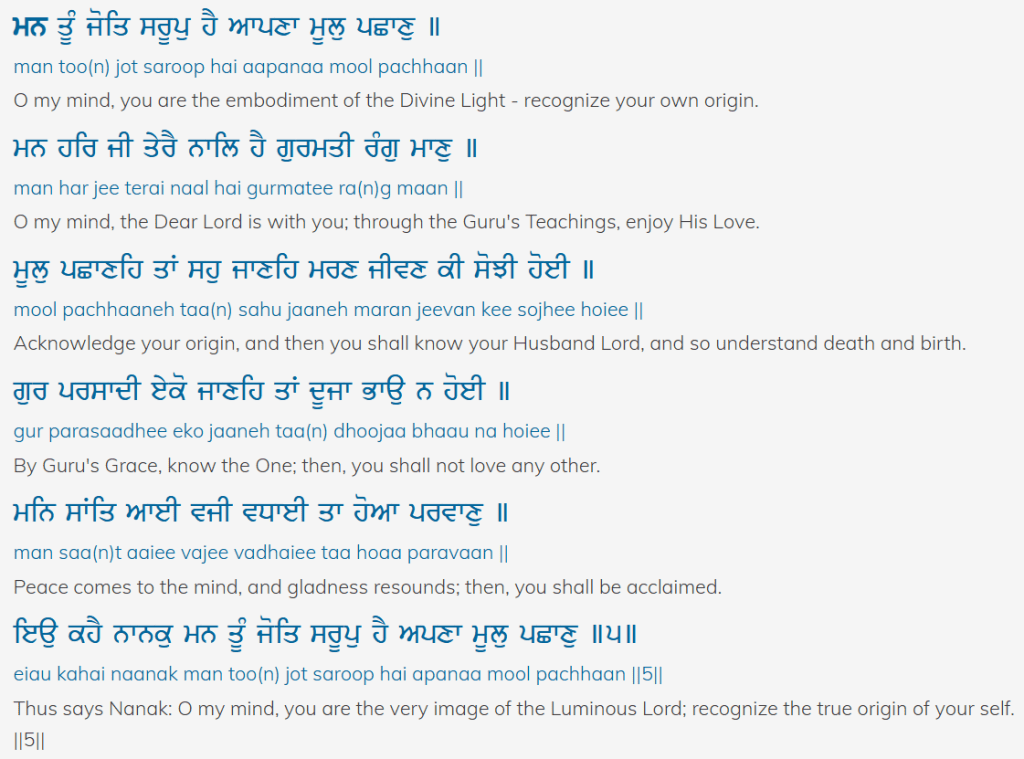
This blog explores the intersection of Sikh wisdom, particularly the Shabad “Man Tu Jot Saroop Hai, Apna Mool Pachaan” (O mind, you are the embodiment of Divine Light; know your origin), and modern philosophical and scientific discourse on consciousness, including panpsychism and interpretations of quantum mechanics.
The Difference Between Emergent and Fundamental Consciousness
At its core, the debate about consciousness often hinges on whether it is emergent or fundamental.
- Emergent Consciousness suggests that subjective experience arises from the complexity of the brain. Like liquidity emerging from the interaction of water molecules, consciousness is viewed as a product of physical systems. While dominant in materialist science, this perspective reduces consciousness to a byproduct of neural activity, posing questions about the nature of self and awareness beyond physical death.
- On the other hand, Fundamental Consciousness posits that consciousness is intrinsic to the universe. It is not “created” by the brain but exists independently, manifesting through all things in varying degrees. Sikhism aligns with this view, proposing that the mind and consciousness are reflections of the Divine Light (Jot), which pervades all creation.
In the Shabad “Man Tu Jot Saroop Hai,” the mind is reminded of its divine essence and urged to recognize its Mool—its origin. This call to self-awareness suggests that the true nature of consciousness is eternal, interconnected, and universal, rather than a fleeting, emergent phenomenon tied to material processes.
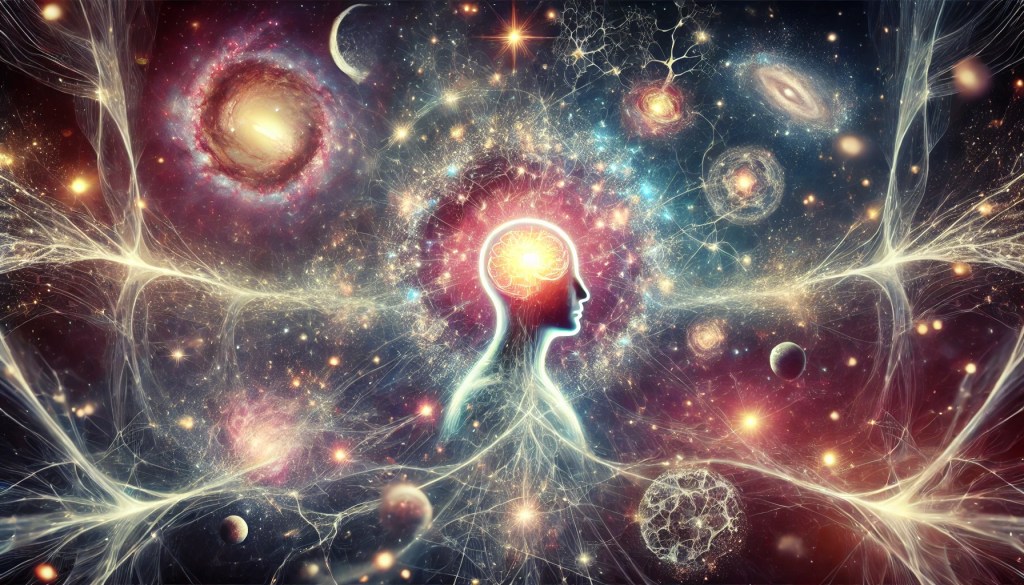
Panpsychism: A Bridge between Science and Spirituality
A growing number of philosophers and scientists are turning to panpsychism, which proposes that consciousness is a fundamental and ubiquitous feature of reality. Unlike the emergent view, panpsychism suggests that even the smallest particles of matter—atoms, electrons—possess some form of proto-consciousness. While not “thinking” in the human sense, these particles contribute to a universal tapestry of awareness.
This perspective resonates with Sikh teachings:
- Gurbani repeatedly emphasizes that the Divine Light (Jot) pervades everything. The verse “Ek Noor Te Sab Jag Upjaya” (From One Light, all creation arose) reflects a panpsychist-like view of interconnected consciousness.
- The Sikh idea of Ik Onkar (One Universal Reality) mirrors the panpsychism assertion that all entities share a common essence of awareness, whether in rudimentary or complex forms.
Panpsychism, much like Sikhism, invites us to rethink our place in the cosmos—not as isolated beings but as participants in a universal consciousness.
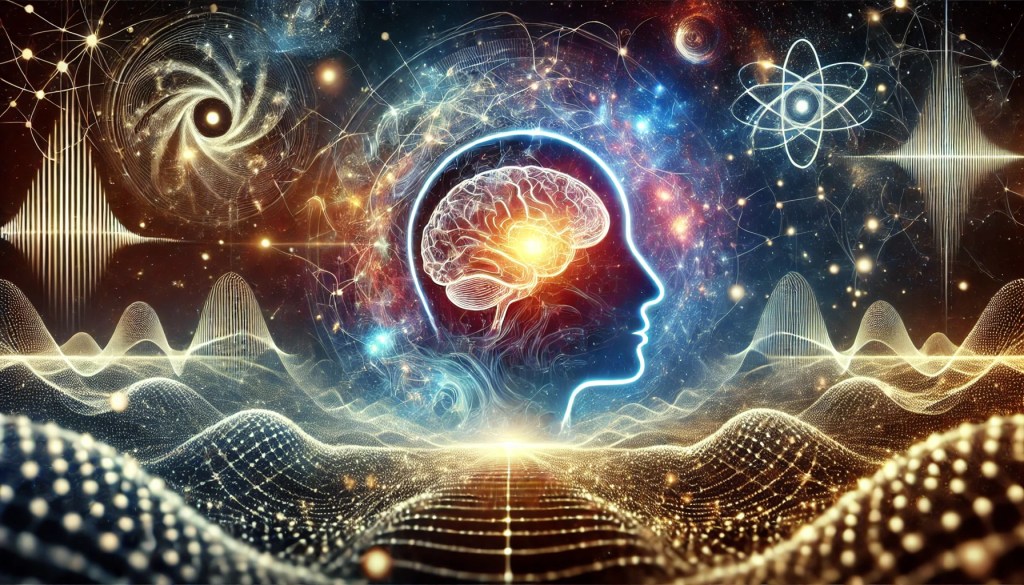
Quantum Mechanics and the Mystery of Consciousness
The scientific revolution of quantum mechanics introduces phenomena that challenge our understanding of reality and suggest intriguing connections to the nature of consciousness:
- The Observer Effect: In quantum mechanics, particles exist in a superposition of states until measured or observed. This raises the question: does the act of observation involve consciousness? While interpretations vary, this phenomenon aligns metaphorically with Gurbani’s emphasis on awareness. Just as the observer collapses a quantum state into reality, the mind’s realization of its divine origin (Mool Pachaan) transforms its perception of existence.
- Non-locality: Quantum entanglement reveals that particles can remain instantaneously connected regardless of distance. This interconnectedness echoes the Sikh concept of oneness, where all creation is unified by the same divine essence.
- Consciousness as Fundamental: Some theories suggest that consciousness itself may be woven into the fabric of reality, influencing or even co-creating the universe. Sikhism’s focus on Naam (the Divine Name) as the creative force resonates with this idea, emphasizing that awareness and existence are intrinsically linked.
The Wisdom of Gurbani in Addressing the Hard Problem
While modern science seeks answers through reductionism and material exploration, Sikhism offers an experiential path to understanding consciousness. The Shabad “Man Tu Jot Saroop Hai” provides profound insight into the hard problem of consciousness by urging self-realization:
- Awareness as Transformation: Gurbani teaches that recognizing one’s divine origin (Jot) is key to transcending the ego and the material mind. This fundamental understanding is crucial in the journey of self-realization and spiritual growth. It echoes the observer effect, where awareness transforms potential into reality, illustrating the profound impact that conscious observation can have on one’s life and experiences. By harnessing this awareness, individuals can cultivate a deeper connection with their true selves and unleash their inherent potential, thereby fostering personal and collective transformation.
- Unity and Interconnectedness: The emphasis on Ek Onkar aligns with quantum non-locality and panpsychism, suggesting that individual consciousness is part of a greater, universal whole, highlighting a profound connection between all forms of existence and encouraging a perspective that transcends the limitations of the self, ultimately fostering a deeper compassion and understanding among all beings.
- Self-Inquiry and Liberation: The call to Mool Pachaan passionately beckons individuals to peel back the superficial layers of identity and intellect, igniting a fire within to connect with the eternal consciousness that forms the very essence of existence. This journey encourages a profound exploration of the self, fueling a relentless quest for a deeper understanding of one’s true nature. It is a transformative path that ultimately liberates us from the confines of conditioned perception, unveiling the radiant authenticity of our being and leading us to a more vibrant and genuine existence.
The dialogue between Sikhism, panpsychism, and quantum mechanics points to a profound truth: consciousness may be the foundation of reality, not merely a byproduct of it. Sikh teachings provide a roadmap for exploring this truth experientially, urging us to recognize our divine essence and transcend the illusion of separateness.
As science delves deeper into the complex mystery of consciousness, it may discover that spiritual traditions hold valuable insights. These perspectives can challenge the prevailing materialist views, helping to deepen our understanding of the profound experience of being aware.
Key Takeaway
The Shabad “Man Tu Jot Saroop Hai, Apna Mool Pachaan” is not just a poetic reminder of our divine nature; it is a profound philosophical statement that speaks to the deepest questions of existence. In its call for self-realization, it bridges the gap between ancient wisdom and modern inquiry, inviting us to explore the nature of consciousness—not as a puzzle to solve, but as an essence to rediscover.
Let us reflect: Is consciousness an emergent phenomenon, as materialist science suggests, or is it fundamental, as Gurbani declares? The answer may lie not in theory but in the transformative experience of knowing our Mool, the divine light within.
 Virdee's Blog
Makes sense this article. Very well written!
The relationship of quantum physics aligns perfectly with the divine light we all possess from our start time. Worldly affairs are the dust we never think of brushing off and the light keeps dimming. Complete (psychological) darkness forces some form of change in the brain, and that’s probably where the phenomenon of emergent consciousness comes into play.
LikeLike