
Introduction
There are works of art that entertain, others that unsettle, and a rare few that continue their work long after the audience has left the theatre. They do not merely tell a story; they ask a question. Their true power lies not in spectacle or suspense, but in their ability to illuminate something about ourselves that we had not previously recognized. Iron Lung belongs, in my view, to this rare category. Although presented as a work of horror, its lasting significance extends far beyond the conventions of the genre. By the time the credits rolled, I found that my thoughts had drifted away from cinema and toward philosophy. What lingered was not fear, but contemplation.
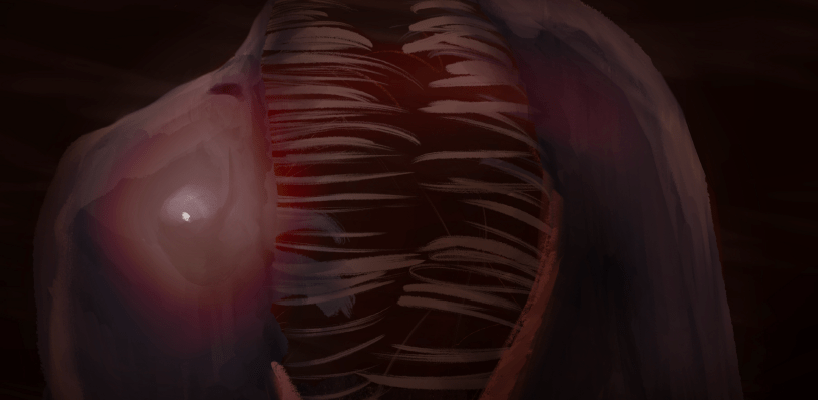
On its surface, Iron Lung tells the story of a condemned man navigating an alien ocean from within the confines of a tiny submarine. He cannot see the world around him. He is forced to rely upon imperfect instruments, fragmentary instructions, and his own increasingly fragile judgment as he descends into an environment that is at once mysterious, hostile, and profoundly indifferent. It is a compelling premise for horror, yet to interpret it solely in those terms is, I believe, to overlook the film’s deeper achievement. Beneath the narrative of survival lies a timeless meditation on the human condition.
As I reflected upon the protagonist’s journey, I found myself less interested in the unseen creature lurking beyond the hull than in the invisible forces at work within the man himself. Fear, guilt, anger, despair, self-pity, and finally courage all struggle for mastery over his mind. The greatest conflict is therefore not between man and monster, but between competing visions of what it means to remain human when every external certainty has disappeared. The film quietly reminds us that the most consequential battles of our lives are rarely fought in the world around us. They are fought within the private landscape of conscience, memory, and character.
This realization led me toward a question that has occupied philosophers, theologians, and spiritual teachers for centuries. From Plato’s reflections on perception, to Aristotle’s account of virtue, to the Stoic resilience of Epictetus, to Carl Jung’s exploration of the shadow, to Viktor Frankl’s search for meaning amidst unimaginable suffering, and finally to Guru Nanak’s teachings on transcending the illusions of ego, there emerges a remarkably consistent concern. Each, in his own way, sought to answer the same enduring question: Who are we when suffering strips away every illusion except our freedom to choose our response?
This essay is not intended as a review of Iron Lung, nor as an attempt to explain every symbol or narrative choice within the film. Rather, it is an exploration of the philosophical questions that the film awakened in me. The submarine became, in my imagination, more than a machine. It became a metaphor for the limitations of human understanding. The unseen creature became a reminder of the fears we carry within ourselves. The ocean became the uncertainty through which every human life must inevitably navigate. Most importantly, the protagonist’s journey became an invitation to reflect upon our own.
Perhaps this is why stories of courage continue to resonate across generations. We recognise, whether consciously or not, that they are never simply about extraordinary individuals confronting extraordinary circumstances. They are about us. Every life eventually presents its own iron lung: a season of illness, grief, failure, loneliness, uncertainty, or moral conflict in which the familiar instruments by which we have navigated life seem suddenly inadequate. In such moments, the central question is no longer whether we shall suffer, for suffering is an unavoidable companion of the human experience. The question is whether suffering will diminish our character or reveal it.
It is in that spirit that I invite you to read the reflections that follow—not as conclusions, but as an ongoing conversation with some of history’s greatest thinkers about courage, meaning, freedom, and the quiet, often unseen struggle to remain faithful to what is true when the darkness closes in.
We Are All Navigating in the Dark
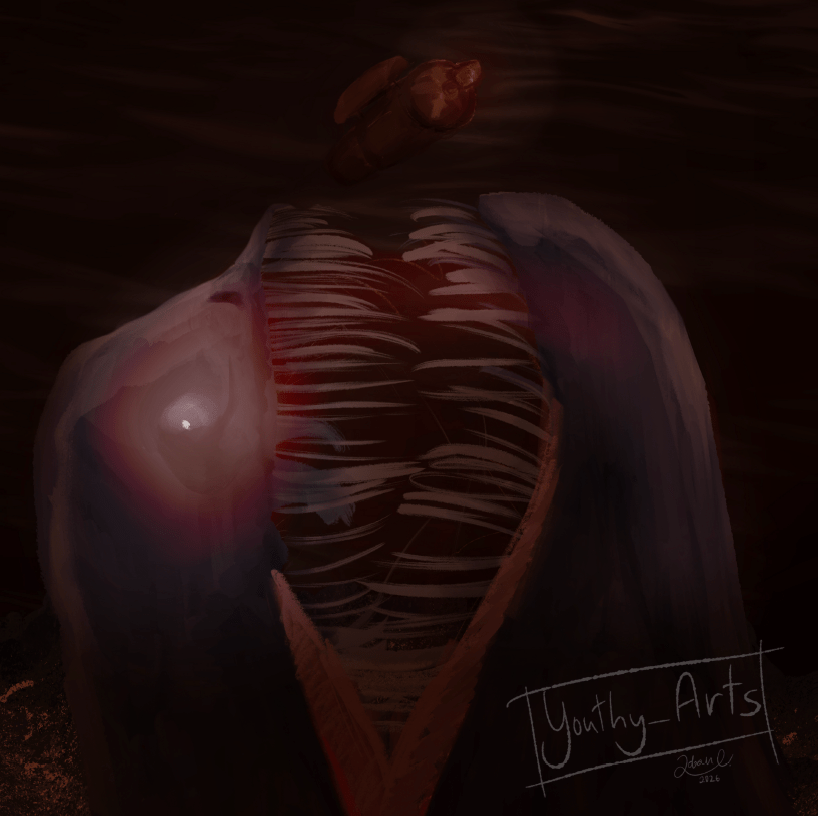
One of the most striking aspects of Iron Lung is not the ocean itself, but the protagonist’s inability to see it. He is enclosed within a vessel no larger than a coffin, moving through an environment he can neither observe nor fully comprehend. Every decision he makes depends upon imperfect instruments, fragmented instructions, and incomplete knowledge. He must act despite uncertainty because hesitation is itself a decision, and often the most dangerous one.
It is tempting to regard this as merely a dramatic device designed to heighten suspense. Yet the more I reflected upon it, the more it seemed to mirror the ordinary experience of being human. We often imagine that uncertainty is an unfortunate interruption to life, something to be eliminated through greater knowledge, careful planning, or technological advancement. In reality, uncertainty is not an exception to the human condition; it is one of its defining features.
The Greek philosopher Plato understood this long before modern psychology or neuroscience. In his celebrated Allegory of the Cave, he describes prisoners who have spent their entire lives watching shadows projected upon a wall, believing those shadows to constitute reality itself. They are not deceived because they lack intelligence, but because their perspective is inherently limited. They cannot perceive what lies beyond the cave, and therefore mistake partial knowledge for complete understanding.
Although separated by more than two millennia, Plato’s cave and the submarine of Iron Lung share a remarkable philosophical kinship. Both are enclosed worlds that confine perception. Both force their inhabitants to interpret reality through incomplete information. Both remind us that the greatest limitations upon human understanding are not necessarily failures of intellect, but the simple fact that we never possess a complete view of the world.
This realization extends far beyond philosophy or cinema. Every significant decision we make is undertaken under conditions of uncertainty. We choose careers without knowing what opportunities or disappointments await us. We commit ourselves to relationships without guarantees of permanence. Parents raise children without any certainty that their decisions today will produce the outcomes they hope for tomorrow. Physicians recommend treatments whose probabilities are informed by evidence but never by absolute certainty. Engineers design systems with extraordinary rigour while acknowledging that risk can be managed but never entirely eliminated.
Life, it seems, has never offered certainty as one of its promises.
Perhaps this is why humility occupies such an important place in so many philosophical and spiritual traditions. The recognition that our knowledge is incomplete does not weaken us; it protects us from the arrogance of believing we understand more than we do. Genuine wisdom begins not with possessing all the answers, but with recognizing the limits of our understanding while continuing to seek truth nonetheless.
The protagonist of Iron Lung cannot wait until every uncertainty has been resolved before deciding what to do next. Neither can we. Every human life eventually reaches moments when action must precede certainty, when responsibility outweighs reassurance, and when faith—not necessarily in a religious sense, but as trust in one’s principles—becomes the only compass available.
Perhaps this is the first lesson the film quietly offers us. We are all navigating unseen oceans. The maps we inherit are incomplete. The instruments upon which we rely are imperfect. The future remains stubbornly hidden beyond the horizon. Yet life asks us to move forward nonetheless.
The question, therefore, is not whether we shall encounter uncertainty. We most certainly will.
The deeper question is whether uncertainty will paralyse us—or whether it will cultivate within us the wisdom, humility, and courage to continue the voyage despite never seeing the whole ocean.
Suffering Is Not the Enemy
If uncertainty is one of the defining features of human existence, then suffering is surely another. Every civilization, every philosophy, and every religion has sought to explain its presence, yet none has succeeded in eliminating it. The forms through which suffering manifests may differ—illness, grief, failure, betrayal, loneliness, injustice, or the quiet burden of regret—but its inevitability remains one of the few constants of the human experience.
Modern society often encourages us to think of suffering as a malfunction, an interruption in an otherwise comfortable life that should be remedied as quickly as possible. We celebrate efficiency, convenience, and the relentless pursuit of happiness, often assuming that a good life is one in which pain has been minimized. Yet history offers a rather different lesson. The men and women whose lives continue to inspire us were seldom those who avoided suffering. More often, they were those who discovered how to endure it without surrendering their humanity.
Few thinkers explored this mystery more profoundly than Viktor Frankl. Having survived the horrors of the Nazi concentration camps, Frankl emerged with a conviction that would shape generations of psychologists, philosophers, and ordinary readers alike. Suffering, he argued, possesses no inherent nobility. Pain, by itself, neither improves nor degrades a person. What transforms suffering is the meaning we choose to discover within it.
Frankl’s most celebrated insight—that those who possess a “why” can bear almost any “how”—was itself inspired by an earlier observation from Friedrich Nietzsche. Although the two men differed in many respects, they shared a remarkable understanding of human resilience: suffering becomes bearable not because it grows smaller, but because purpose grows larger. The weight remains the same, yet the shoulders that carry it are strengthened by meaning.
This distinction is essential, for it prevents us from romanticising pain. There is nothing admirable about suffering for its own sake. Illness remains tragic. Loss remains painful. Injustice remains unjust. To suggest otherwise would diminish the very real experiences of those who endure them. The philosophical challenge is not to celebrate suffering, but to ask whether suffering will be permitted to have the final word in shaping our character.
It is here that Iron Lung quietly reveals its greatest depth. Throughout much of the film, the protagonist appears driven by little more than survival. His world grows increasingly hostile, his circumstances progressively more desperate, and his hope ever more fragile. Yet there comes a moment when the struggle ceases to be merely about preserving his own life. Instead, he willingly embraces extraordinary pain because there remains the faintest possibility that his actions may benefit another person.
That decision alters the moral landscape of the entire story.
The suffering itself has not changed. The physical agony is no less severe. The uncertainty of the outcome is no less overwhelming. What changes is the purpose toward which that suffering is directed. In that moment, endurance becomes sacrifice, and survival gives way to service.
This is a distinction that extends far beyond the film. History repeatedly reminds us that the most remarkable expressions of human courage are seldom motivated by self-preservation alone. Parents willingly sacrifice sleep, comfort, and personal ambition for their children. Firefighters enter burning buildings for strangers they have never met. Medical professionals remain beside the sick during epidemics, fully aware of the risks to themselves. Soldiers, aid workers, and countless ordinary individuals have accepted extraordinary hardship because they believed something beyond themselves was worth protecting.
Such lives are not defined by the absence of suffering.
They are defined by the presence of purpose.
Perhaps this is why suffering has occupied such a central place in philosophy for thousands of years. It confronts every human being with the same unavoidable question. When comfort is stripped away, when certainty disappears, and when life refuses to unfold according to our expectations, what remains?
Frankl’s answer was meaning.
Nietzsche’s answer was self-overcoming.
The Stoics answered with virtue.
Guru Nanak answered with truth and selfless service.
Although they travelled different intellectual paths, they arrived at a remarkably similar destination. Human dignity does not arise from a life free of suffering. It arises from the freedom to decide what our suffering will mean.
Perhaps, then, suffering is not humanity’s greatest enemy.
Meaninglessness is.
Courage Has Been Misunderstood
Few words are invoked more frequently—and understood less accurately—than courage. Popular culture often portrays it as fearlessness, an extraordinary quality possessed by exceptional individuals who charge headlong into danger without hesitation or doubt. We celebrate the dramatic image of the fearless hero and, in doing so, unintentionally persuade ourselves that courage belongs only to a gifted few.
The philosophical tradition presents a very different understanding.
Aristotle argued that courage is not the absence of fear but the virtue that occupies the space between two equally destructive extremes. On one side lies cowardice, in which fear governs every decision and prevents us from acting according to reason. On the other lies recklessness, which refuses to acknowledge danger altogether. Neither extreme represents courage, for both abandon sound judgment. Courage requires something far more demanding: the willingness to see reality clearly, to recognize genuine danger, and yet to act in accordance with what is right rather than what is merely comfortable.
This distinction is more than an intellectual curiosity. It changes the way we understand our own lives.
If courage required the absence of fear, then very few of us could ever hope to be courageous. Every meaningful human experience carries with it some measure of uncertainty and vulnerability. We fear failure because we care about success. We fear rejection because we value love and belonging. We fear loss because we have first experienced attachment. Fear, therefore, is not evidence of weakness. It is evidence that something before us matters.
The mistake lies not in feeling fear but in allowing fear to become the author of our decisions.
The Stoic philosophers understood this with remarkable clarity. They did not seek to eliminate emotion, as they are sometimes misunderstood to have done. Rather, they sought to cultivate the discipline by which reason and virtue remain sovereign even when emotion threatens to overwhelm them. The courageous person is therefore not one who feels nothing, but one who refuses to allow transient emotions to determine enduring principles.
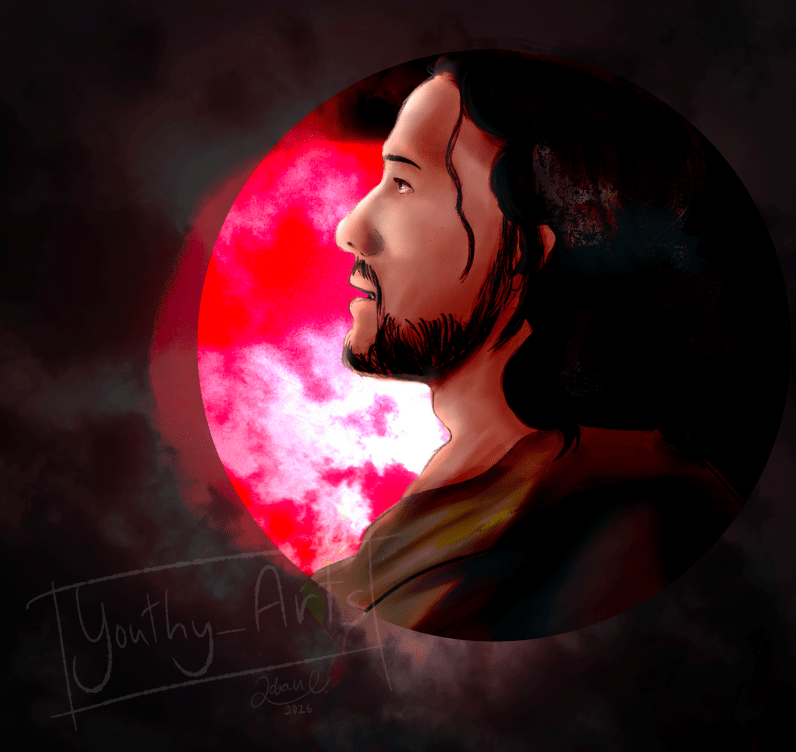
This understanding finds powerful expression in Iron Lung. Throughout the film, the protagonist is visibly afraid. His fear is neither hidden nor conquered. It accompanies him through every decision, every setback, and every descent into the unknown. Yet there comes a moment when fear no longer occupies the highest place in his hierarchy of values. Something else assumes that position. Whether one interprets it as duty, responsibility, redemption, or simply the desire that another might benefit from his sacrifice, the effect is the same. Fear remains present, but it is no longer in command.
This may be the most profound lesson the film offers. Courage does not arrive after fear has departed. Courage begins the moment fear ceases to be the deciding voice.
History offers countless examples of this quieter form of courage. It is found in the scientist who publishes inconvenient truths despite political opposition. It is found in the journalist who reports honestly under the threat of censorship. It is found in the physician who continues caring for patients during an epidemic, the firefighter who enters a burning building while others flee, the parent who carries a family through seasons of hardship, and the teacher who continues believing in a struggling student long after others have given up.
These acts rarely arise from fearlessness.
They arise from conviction.
The Sikh tradition offers yet another perspective. Guru Nanak did not describe courage as domination over others, nor as the pursuit of glory or recognition. Courage emerged through freedom from haumai, the illusion that the self occupies the centre of existence. When fear is rooted primarily in the preservation of the ego—our reputation, our comfort, our status, our certainty—it grows stronger with every threat. When one’s life becomes oriented toward truth, compassion, justice, and service, fear does not disappear, but it loses its authority. The question gradually shifts from “What will happen to me?” to “What is the right thing to do?”
That shift changes everything.
Perhaps this is why the greatest acts of courage so often appear ordinary. They are seldom accompanied by applause, dramatic speeches, or public recognition. More often, they unfold in hospital corridors, family homes, classrooms, laboratories, places of worship, and quiet offices where men and women choose integrity over convenience, honesty over comfort, and responsibility over self-interest. History rarely records these moments, yet civilization quietly depends upon them.
Reflecting upon Iron Lung, I found myself arriving at a conclusion that extended far beyond the film itself.
Courage is not an emotion.
It is not a personality trait.
It is not the privilege of heroes.
Courage is a decision.
It is the quiet decision to allow one’s principles to speak more loudly than one’s fears. It is choosing responsibility over avoidance, truth over convenience, service over self-preservation, and hope over despair—not because the outcome is guaranteed, but because the decision itself expresses the kind of person we aspire to become.
Perhaps this is why courage has inspired philosophers, saints, and ordinary people throughout history.
It is the moment in which character becomes visible.
The Shadow Within
If courage is the visible expression of character, then it is worth asking what so often stands in its way. Why do intelligent, compassionate, and well-intentioned people sometimes act against their own principles? Why do fear and resentment so often succeed where reason and conscience seem to fail?
Carl Jung believed the answer lay within what he called the shadow. Contrary to popular imagination, the shadow is not simply the collection of our darkest impulses. It is the hidden dimension of the self—the fears, desires, insecurities, resentments, unresolved griefs, and painful truths we find difficult to acknowledge. It is everything we quietly exile from our conscious identity because it does not fit the image we wish to project, either to others or to ourselves.
Jung’s insight was both unsettling and liberating. The danger does not lie in possessing a shadow, for every human being does. The danger lies in pretending that it does not exist. Whatever remains hidden from our awareness gradually acquires influence over our judgments, our relationships, and our decisions. We imagine ourselves acting rationally, while all the time unseen fears and unhealed wounds quietly shape the stories we tell ourselves about the world.
Viewed through this lens, Iron Lung becomes more than a confrontation with an external monster. It becomes a confrontation with the unknown regions of the human soul. The unseen creature beyond the submarine may be terrifying, but the greater question posed by the film is whether the protagonist can confront the darkness within himself. His guilt, fear, despair, and longing for redemption accompany him far more intimately than anything lurking beyond the steel hull.
Perhaps this explains why the film evokes such unease. Most horror invites us to fear what lies outside us. Iron Lung subtly encourages us to wonder whether the greatest source of terror has always been internal. Every one of us has experienced moments when fear disguises itself as certainty, when wounded pride masquerades as righteous anger, or when disappointment quietly hardens into resentment. Left unexamined, these emotions begin to shape our perception of reality until we mistake them for objective truth rather than deeply personal experience.
This is one of the great paradoxes of human nature. We often believe we see the world as it is, when in fact we see it as we are. Our fears colour our expectations. Our wounds influence our judgments. Our past experiences become the lenses through which we interpret the present. The philosopher may call this perception, the psychologist may call it projection, and the spiritual teacher may call it attachment, but they are all pointing toward a remarkably similar truth: before we can understand the world, we must first become honest about ourselves.
There is, however, another side to Jung’s thought that is often overlooked. The shadow does not contain only those qualities we consider undesirable. It may also contain our unrealized courage, our compassion, our creativity, and our capacity for sacrifice—qualities neglected because they require us to become someone larger than the person we have grown accustomed to being. In this sense, confronting the shadow is not merely an act of self-criticism; it is an act of self-discovery.
The protagonist’s journey reflects precisely this possibility. As his circumstances deteriorate, the familiar narratives by which he has understood himself begin to collapse. Stripped of certainty, comfort, and control, he is confronted not only with fear but also with a capacity for courage and sacrifice that perhaps even he did not know he possessed. It is not the absence of darkness that reveals his character. It is his willingness to continue acting despite it.
This insight resonates far beyond psychology. The ancient injunction to “know thyself,” inscribed upon the Temple of Apollo at Delphi, has echoed through philosophy for over two thousand years because self-knowledge remains the beginning of wisdom. Before we can lead others, heal others, or even judge others fairly, we must first possess the humility to examine our own motives with honesty.
Perhaps this is the true shadow Jung hoped we would have the courage to confront. It is not the monster hiding in the darkness beyond us, but the unexamined person living quietly within us.
Only when we are willing to face that person can genuine freedom begin.
Freedom Cannot Be Taken Away
There comes a point in every life when circumstances reveal the limits of our control. We may lose our health despite every precaution, our careers despite years of diligent effort, our loved ones despite the depth of our affection, or our carefully laid plans through forces entirely beyond our influence. Such moments often leave us with the unsettling realization that the world owes us no guarantees. The illusion of control, upon which so much of modern life is built, quietly gives way to a more humbling truth: much of what happens to us lies beyond our choosing.
It is precisely at this point that philosophy asks one of its most enduring questions. If so much of life is governed by fortune, circumstance, or chance, where does genuine freedom reside?
The Stoic philosopher Epictetus offered an answer of remarkable simplicity and depth. Some things, he argued, are within our control, while others are not. We do not command the actions of other people, the unfolding of history, the inevitability of illness, or the certainty of death. What remains within our authority are our judgments, our principles, and the manner in which we choose to respond. Wisdom begins when we learn to distinguish between these two domains.
Centuries later, Viktor Frankl arrived at a strikingly similar conclusion under circumstances almost impossible to imagine. Reflecting upon his imprisonment in Nazi concentration camps, he observed that although every external freedom had been stripped away, one remained beyond the reach of even the most oppressive regime: the freedom to choose one’s attitude and one’s response. Frankl described this as humanity’s last freedom, not because it is the least significant, but because it is the one freedom no external power can entirely extinguish.
This insight transforms our understanding of both freedom and courage.
We often imagine freedom as the ability to do whatever we desire. Yet such freedom is always vulnerable to circumstances. Illness may limit it. Poverty may constrain it. Imprisonment may abolish it altogether. Moral freedom, however, is of an entirely different order. It is the capacity to remain faithful to one’s principles even when every external circumstance encourages their abandonment. It is the freedom not merely to act, but to choose the kind of person we will become.
It is here that Iron Lung reaches its deepest philosophical resonance.
The protagonist is confined within a steel vessel scarcely larger than his own body. He possesses almost no control over the environment into which he has descended. He cannot negotiate with the ocean, reason with the unseen creature, or guarantee his own survival. His physical freedom has been reduced to almost nothing.
Yet his moral freedom remains intact.
The defining moment of the film is not remarkable because it displays extraordinary endurance. It is remarkable because it reveals extraordinary choice. Faced with circumstances that appear hopeless, the protagonist willingly embraces unimaginable suffering because there remains the faintest possibility that his actions may serve someone beyond himself. Whether or not that hope is ultimately fulfilled becomes almost secondary. What matters is that, even at the edge of despair, he refuses to surrender the one freedom that still belongs entirely to him: the freedom to choose his response.
This understanding reaches beyond philosophy into the realm of spiritual wisdom. Guru Nanak repeatedly reminded us that external conditions neither define nor diminish the human spirit unless we permit them to do so. The measure of a life is not found in the circumstances into which we are born, nor in those through which we pass, but in whether we remain anchored in truth, compassion, humility, and service despite them. Freedom, in this sense, is inseparable from responsibility. It is not the freedom to escape suffering, but the freedom to decide what suffering will make of us.
Reflecting upon these ideas, I found myself asking a question that extends far beyond the film itself. We often spend enormous energy trying to control the world around us, yet comparatively little examining the one domain over which we possess genuine authority—our own character. We cannot always choose the events that shape our lives, but we can choose whether those events will make us more bitter or more compassionate, more fearful or more courageous, more self-absorbed or more willing to serve others.
Perhaps this is why the final acts of Iron Lung remain so deeply affecting. They remind us that the highest expression of freedom is not found in escaping difficult circumstances, but in refusing to allow those circumstances to dictate the quality of our character.
There are prisons built of steel, and there are prisons built of fear.
The first may confine the body.
Only the second can imprison the soul.
And only we possess the key.
Beyond Ego
As I reflected upon Iron Lung, I found myself returning repeatedly to one of the central insights of Guru Nanak’s teachings: the human condition is shaped not only by what happens to us, but by the way we understand ourselves. Much of our suffering arises because we mistake the constructed self—the collection of our ambitions, fears, memories, possessions, successes, and failures—for the entirety of who we are. Sikh philosophy refers to this condition as haumai, often translated as ego, though the word carries a meaning far richer than pride or vanity alone.
Haumai is the illusion of separateness. It is the quiet conviction that the self stands alone, isolated from others, struggling endlessly to preserve its own importance, security, and identity. From this illusion emerge many of the anxieties that accompany human life. We fear failure because our identity has become entangled with achievement. We fear rejection because we mistake acceptance for our worth. We fear loss because we cling to what was never ours to possess permanently. In each case, it is not merely the external event that wounds us, but our attachment to the story we have built about ourselves.
Viewed from this perspective, fear begins to reveal its deeper roots. Much of what we call fear is, in truth, the ego’s instinct for self-preservation. It seeks certainty in an uncertain world, permanence in a temporary existence, and control over realities that can never be fully controlled. The tighter the ego grasps, the more fragile it becomes, for life has a remarkable way of exposing the impermanence of everything to which we cling.
This insight does not suggest that suffering is imaginary, nor does it ask us to suppress our emotions. Guru Nanak never denied the reality of pain. Human grief, loss, injustice, and hardship remain deeply real. Rather, his teaching invites us to ask a different question. Instead of asking, “Why has this happened to me?” we are invited to ask, “Who is this ‘me’ that suffers?” It is a subtle distinction, yet one capable of transforming the entire conversation.
The protagonist of Iron Lung appears, at first, to be consumed by the instinct to survive. Such a desire is entirely natural. Yet as the story unfolds, something begins to change. The centre of gravity shifts away from self-preservation toward something larger than himself. Whether one interprets his final actions as redemption, responsibility, or sacrifice, they reveal a profound truth: there comes a point at which preserving one’s character becomes more important than preserving one’s comfort.
Perhaps this is the quiet paradox at the heart of genuine courage. We often imagine courage as an assertion of the self, yet the deepest acts of courage seem to arise precisely when the self loosens its grip. Parents who instinctively shield their children from danger do not pause to calculate personal cost. Firefighters entering collapsing buildings are not motivated by self-interest. Medical workers who remain beside infectious patients during epidemics are rarely driven by the pursuit of recognition. In each case, service temporarily displaces self-concern.
This is why so many spiritual traditions regard humility not as weakness but as liberation. Humility does not require us to think less of ourselves; it asks us to think of ourselves less often. It releases us from the exhausting burden of making our own comfort, status, or reputation the centre of every decision. In that freedom, compassion becomes more natural, responsibility more enduring, and courage more attainable.
As I considered the protagonist’s final choices, I was reminded that perhaps the opposite of fear is not courage at all.
Perhaps it is love.
Not love understood merely as emotion, but as the willingness to place truth above convenience, service above self-preservation, and the good of another above the relentless demands of the ego. When viewed through that lens, courage becomes something more than heroic action. It becomes love expressed under the most difficult of circumstances.
Perhaps that is why the Sikh Gurus spoke so often of seva, selfless service, as the natural expression of spiritual maturity. The journey beyond ego is not an escape from the world, but a deeper engagement with it. It is the gradual discovery that a life centred entirely upon oneself inevitably becomes smaller, while a life devoted to truth and service expands beyond the limits of individual existence.
The deeper I reflected upon Iron Lung, the more I began to suspect that the protagonist’s greatest escape was never from the submarine itself.
It was from the prison of the self.
And perhaps that is the most profound freedom any human being can ever attain.
The Iron Lung Within Us
By the time Iron Lung reached its conclusion, I no longer believed I had been watching a story about a submarine descending into an alien ocean. I had been watching an allegory of the human condition. The iron lung had ceased to be a machine and had become a metaphor. It represented every circumstance in which human beings find themselves confined by forces beyond their control, compelled to make consequential decisions with limited knowledge and uncertain outcomes.
Each generation inherits its own version of that prison. For some, it has been the devastation of war or political oppression. For others, it has taken the form of illness, financial hardship, grief, loneliness, addiction, moral uncertainty, or the quiet despair that accompanies the loss of purpose. The external circumstances differ dramatically, yet they all share a common feature: they compel us to confront aspects of ourselves that comfort and prosperity often conceal.
It is in such moments that life’s deepest questions cease to be philosophical abstractions and become intensely personal. How should we respond when certainty disappears? What remains when success, reputation, security, or even hope begin to slip beyond our grasp? Can suffering become a source of wisdom rather than merely a source of pain? Above all, who do we become when adversity strips away the identities upon which we have quietly built our lives?
The reflections explored throughout this essay do not point toward easy answers, nor do they suggest that suffering is somehow desirable. Rather, they converge upon a simpler and perhaps more demanding truth. The quality of a human life is measured less by the circumstances it encounters than by the character it reveals in response to those circumstances. Uncertainty may test us. Suffering may shape us. The shadow may humble us. Yet it is courage that ultimately reveals who we are.
As I considered the protagonist’s final act, I realised that what moved me was not the certainty of success, but the certainty of intention. He acts without knowing whether his sacrifice will accomplish its purpose. He acts because, in that moment, doing what is right becomes more important than knowing what will happen next.
Perhaps that is what genuine courage has always been.
Not confidence in the outcome.
But faithfulness to one’s principles despite the uncertainty of the outcome.
That insight extends far beyond the boundaries of cinema. Every one of us will, sooner or later, enter an iron lung of our own. It may arrive through illness, loss, failure, disappointment, betrayal, or simply the slow recognition that life refuses to unfold according to our carefully constructed plans. When that moment comes, the temptation will be to believe that our circumstances have become our identity.
Yet they have not.
Circumstances may confine our bodies, restrict our choices, and alter the course of our lives. They cannot, unless we permit them, determine the quality of our character. There remains within every human being a quiet freedom that no hardship can entirely extinguish: the freedom to choose what kind of person we shall become in response to what life asks of us.
This, I believe, is the enduring lesson that Iron Lung left with me. The greatest victory is rarely over the darkness that surrounds us. It is over the darkness that seeks to govern us from within. The monster beyond the submarine may terrify us, but it is the fear within ourselves that ultimately determines the course of our lives.
The irony is that we spend so much of our lives trying to escape difficult circumstances, when perhaps the more important task is learning not to abandon ourselves within them. The prisons that shape us most profoundly are seldom built from steel. More often, they are built from fear, resentment, despair, and the quiet belief that our circumstances have the final word.
They do not.
The final word belongs to the choices we make when certainty has disappeared.
Long after the credits rolled, I realised that the film had quietly reversed the question with which it began. I had entered the story wondering whether the protagonist would survive the monster waiting in the darkness.
I left wondering something far more important.
When my own iron lung arrives, who will I become?

